RFI
Radio Frequency Interferences (RFI) are any radio signals that are not of cosmic origin and that disturb sensitive radio astronomy instrumentation and observations. Astronomical signals are typically very weak, so even modest man-made emissions can significantly affect data quality. Characterizing RFI sources and mapping their frequency band occupation are essential to understand the impact on scientific observations. Continuous monitoring of the RFI environment enables astronomers to select the observing times and frequency bands with minimal RFI, and to plan observations accordingly.
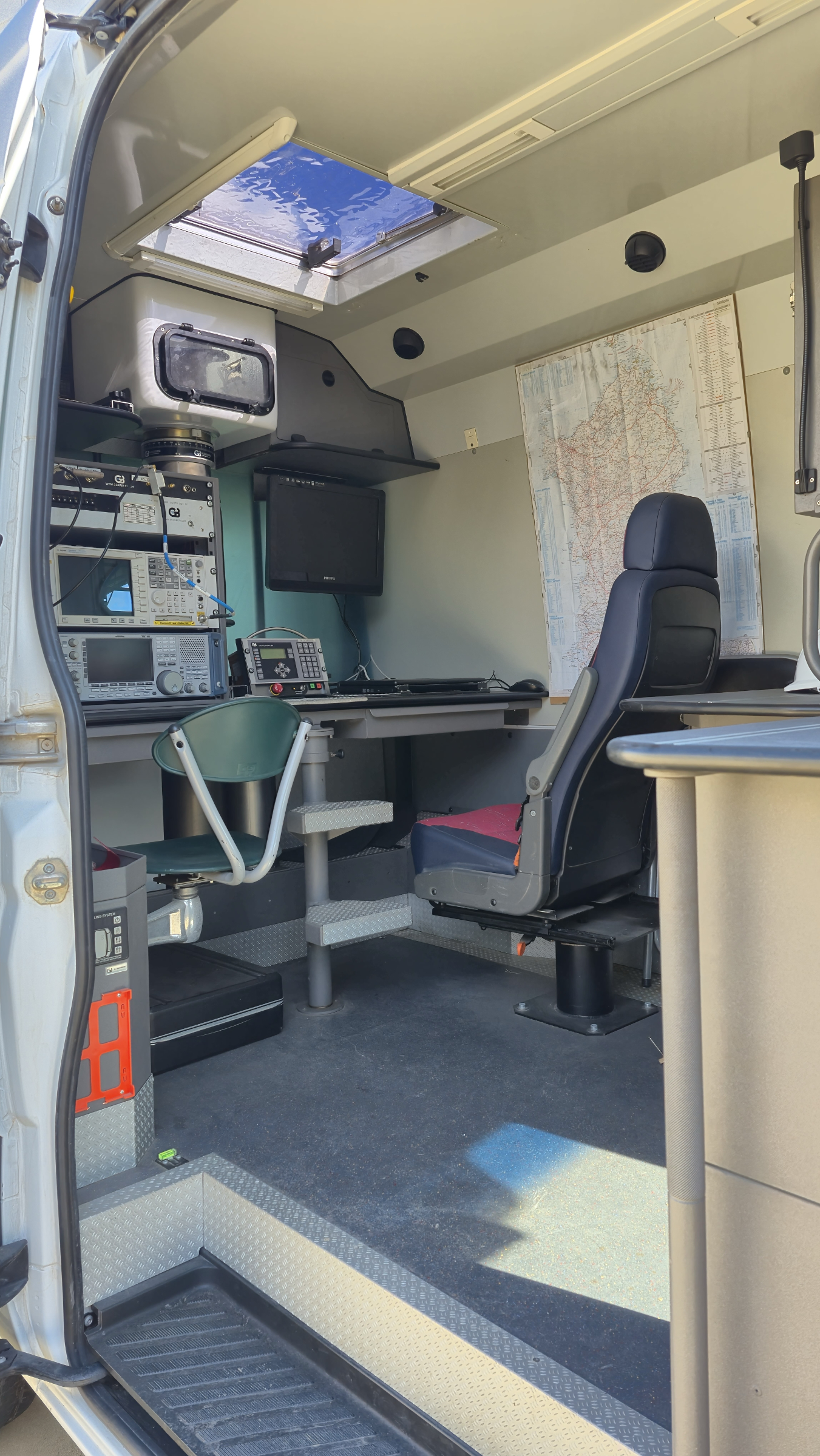
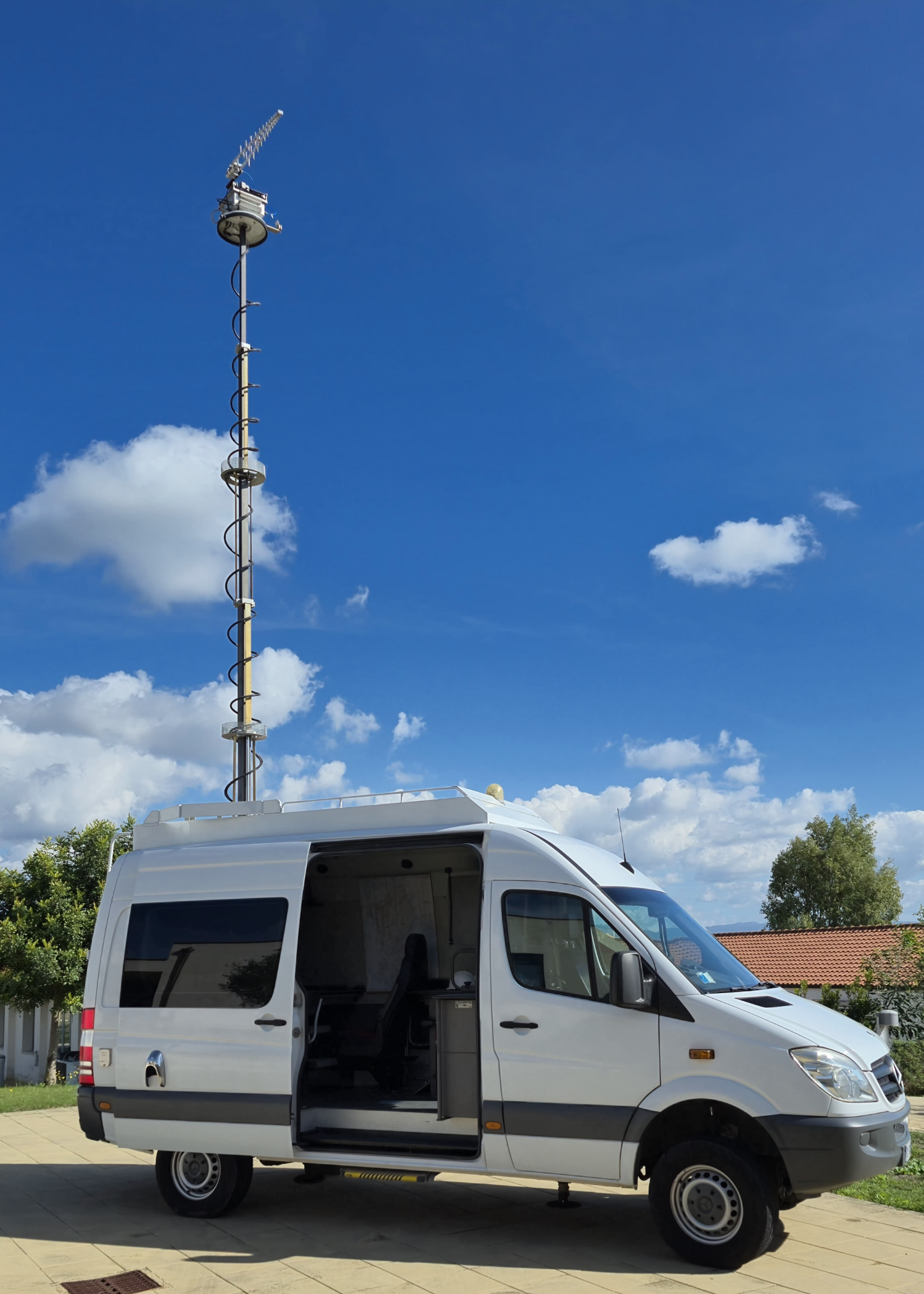
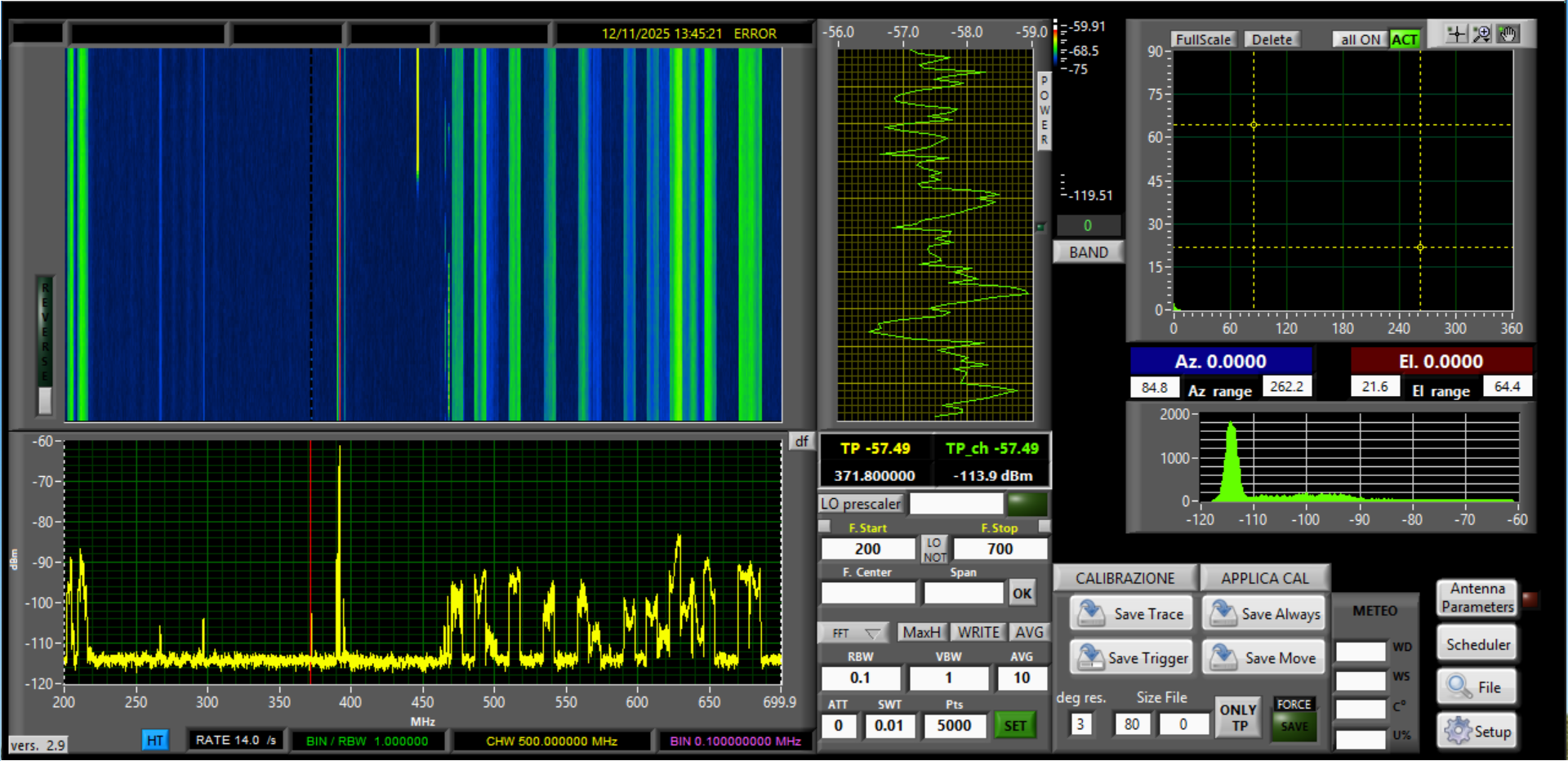
At the Sardinia Radio Telescope (SRT), ongoing RFI monitoring and collaboration with local authorities support minimization of interference in protected bands. The Astronomical Observatory of Cagliari operates a mobile laboratory for detecting RFI in the area surrounding the SRT. This mobile system enables spatial-temporal mapping of interference and informs site usage policies. The methodology and system are described in Bolli et al. (2013).
A real-time RFI monitoring system is under development to add value for astronomers during scientific observations. This system aims to provide real-time flagging, visualization, and decision support to optimize observing strategies, including adaptive scheduling and dynamic frequency considerations. Typical local RFI sources near Sardinia include terrestrial communications and satellite downlinks, which can affect several commonly used bands.