
Methods for detection and analysis of weak radio sources with single-dish radio telescopes
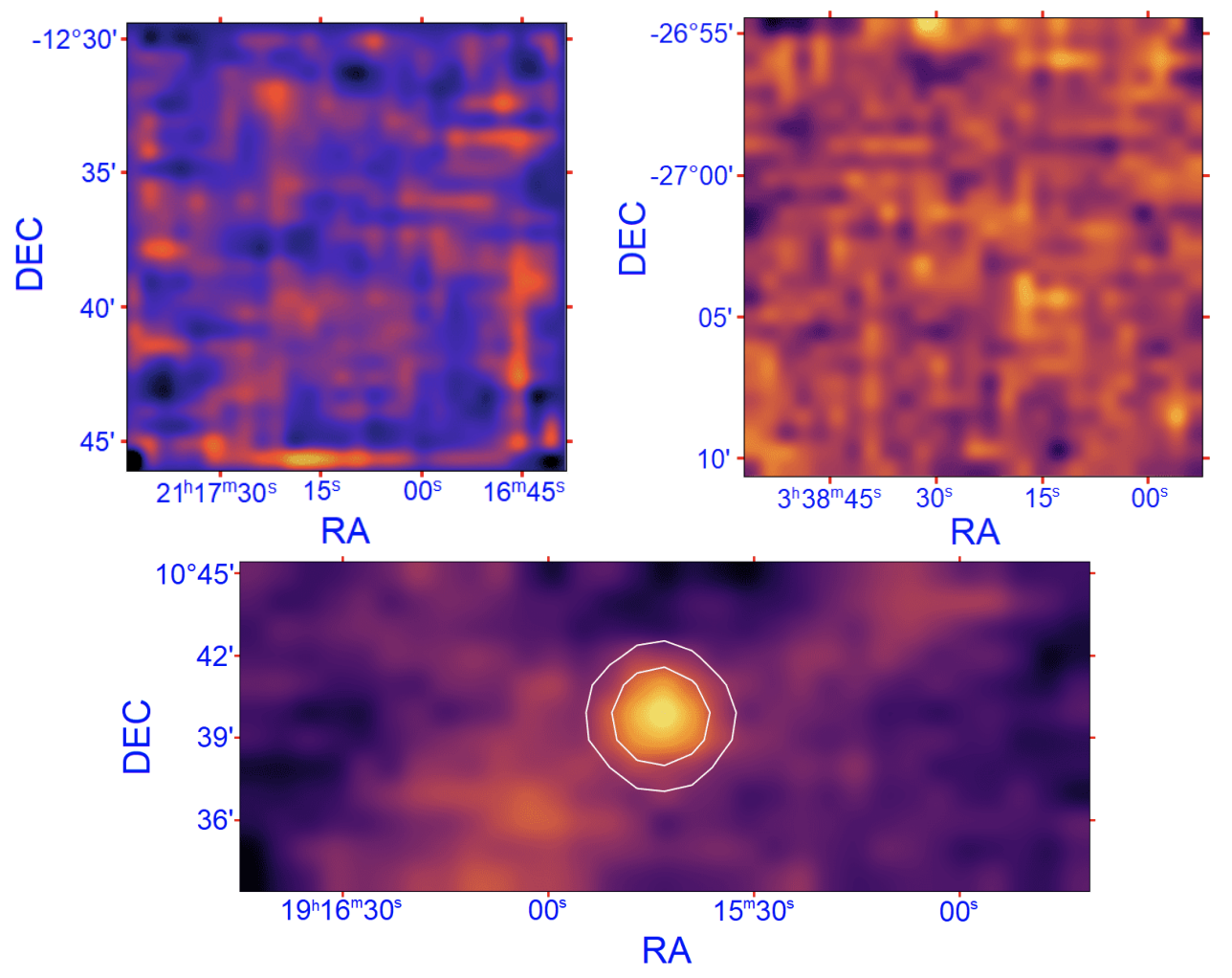
The detection of mJy/sub-mJy point sources is a significant challenge for single-dish radio telescopes. Detection or upper limits on the faint afterglow from GRBs or other sources at cosmological distances are important means of constraining the source modeling. Using the Sardinia Radio Telescope (SRT), we compare the sensitivity and robustness of three methods applied to the detection of faint radio sources from raster maps around a known source position: the smart ’quick-look’ method, the ’source extraction’ method (typical of high-energy astronomy), and the fit with a 2-D Gaussian. We developed a Python code specific for the analysis of point-like radio sources applied to the SRT C-band (6.9 GHz) observations of both undetected sources (GRB afterglows of 181201A and 190114C) and the detected Galactic X-ray binary GRS 1915+105. Our comparative analysis of the different detection methods made extensive use of simulations as a useful complement to actual radio observations. The best method for the SRT data analysis is the fit with a 2-D Gaussian, as it pushes down the sensitivity limits of single-dish observations - with respect to more traditional techniques - to 1.8 mJy, improving by ∼ 40 % compared with the initial value. This analysis shows that especially for faint sources, good maps of the scanned region pre- or post-outburst are essential.
Published in Experimental Astronomy, Volume 49, Issue 3, p.159-182